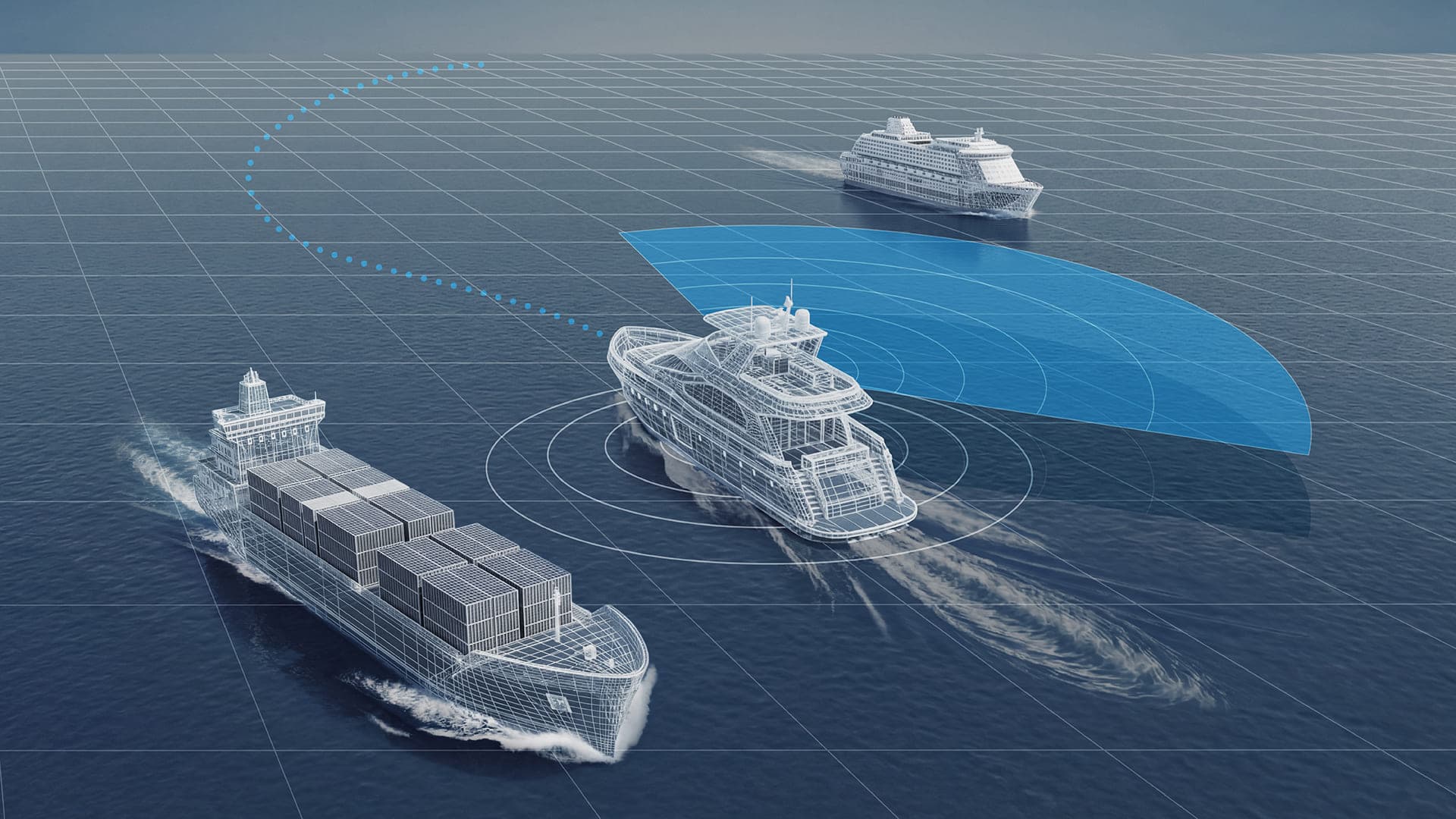


This is Eight Knot's vessel intelligence technology, built on AI and robotics. It covers the core technologies required for autonomous navigation, from perceiving the surrounding environment and making decisions appropriate to the situation through to controlling the vessel itself.
Advantages of EightKnot's Intelligence Technology
01
Continuous accumulation of diverse real-vessel and real-world environment data
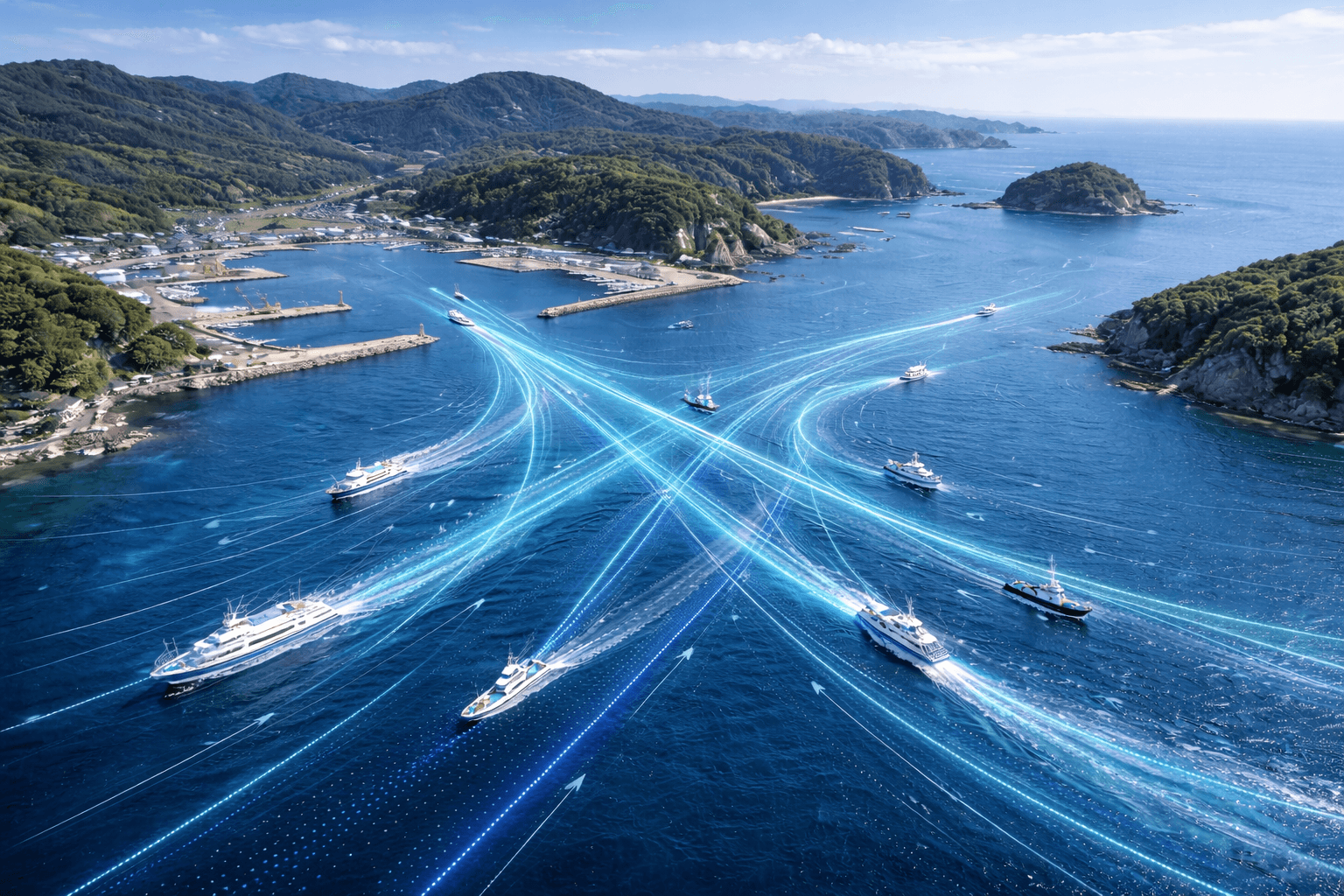
We continuously accumulate operational data from autonomous navigation and maneuvering assistance on actual vessels, organized by hull type, and feed differences in behavior under real conditions such as currents, wind, and waves back into our learning. This delivers stable control in real sea conditions, and this proven record has also led to collaboration with leading manufacturers.
02
Hull models built for each hull type
We build the hull motion models essential for control for each hull type, and automatically estimate and optimize their parameters from real-vessel data. This removes the towing tank tests and weeks of expert tuning previously required, enabling rapid deployment regardless of hull type or propulsion system.

03
Control algorithms adapted to the characteristics of each hull
Model Predictive Control (MPC), which accounts for external disturbances such as wind, waves, and currents, provides end-to-end, high-precision control across docking and undocking, station keeping, and navigation. It enables smooth, safe maneuvering even in adverse weather, and maintains consistent control quality across different vessel types and sea conditions.


System

A packaged system that integrates the technologies making up Eight Knot AI CAPTAIN. It can be retrofitted to existing small vessels, giving access to the full set of functions required for autonomous navigation, including docking and undocking, route setting, and avoidance of other vessels and obstacles. The functions installed can also be selected according to the intended use. Even during autonomous navigation, the system is designed to be operated under the supervision of a licensed captain.
Configuration Example
AIS (Automatic Identification System)
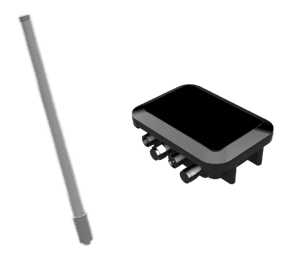
Receives information transmitted by other vessels, including vessel name, position, course, and speed. It identifies distant vessels that are difficult to distinguish with cameras or LiDAR, supporting awareness of surrounding traffic and navigation decisions.

GNSS / QZSS (Michibiki)
Satellite positioning provides the vessel's position, speed, and heading. The system supports correction data from the Centimeter Level Augmentation Service (CLAS) of the Quasi-Zenith Satellite System (QZSS) "Michibiki", enabling high-precision positioning at sea, where reference stations cannot be installed. An onboard IMU also detects acceleration and rotation to complement the positioning data.
Radar
Uses radio waves to detect other vessels and obstacles at long range. It complements situational awareness in conditions that cameras and LiDAR handle poorly, such as darkness or poor visibility.
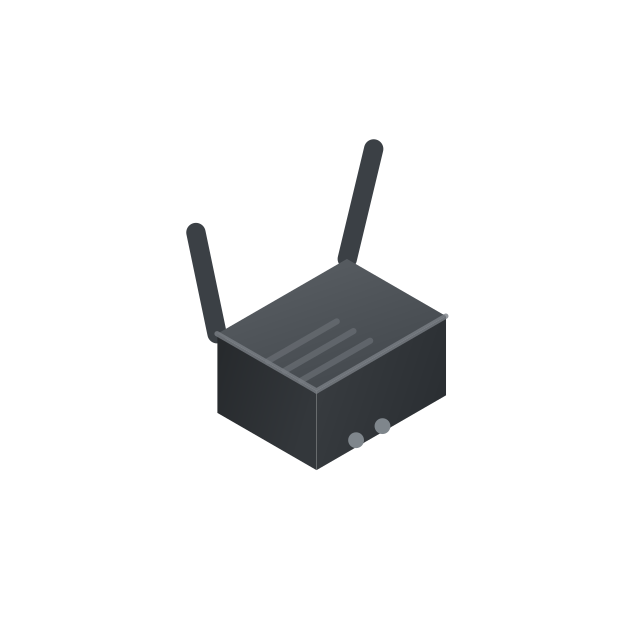
Network
A 4G/LTE connection is used to transmit operational data and to enable remote monitoring from shore. Satellite communication can also be used in waters where connectivity is limited.
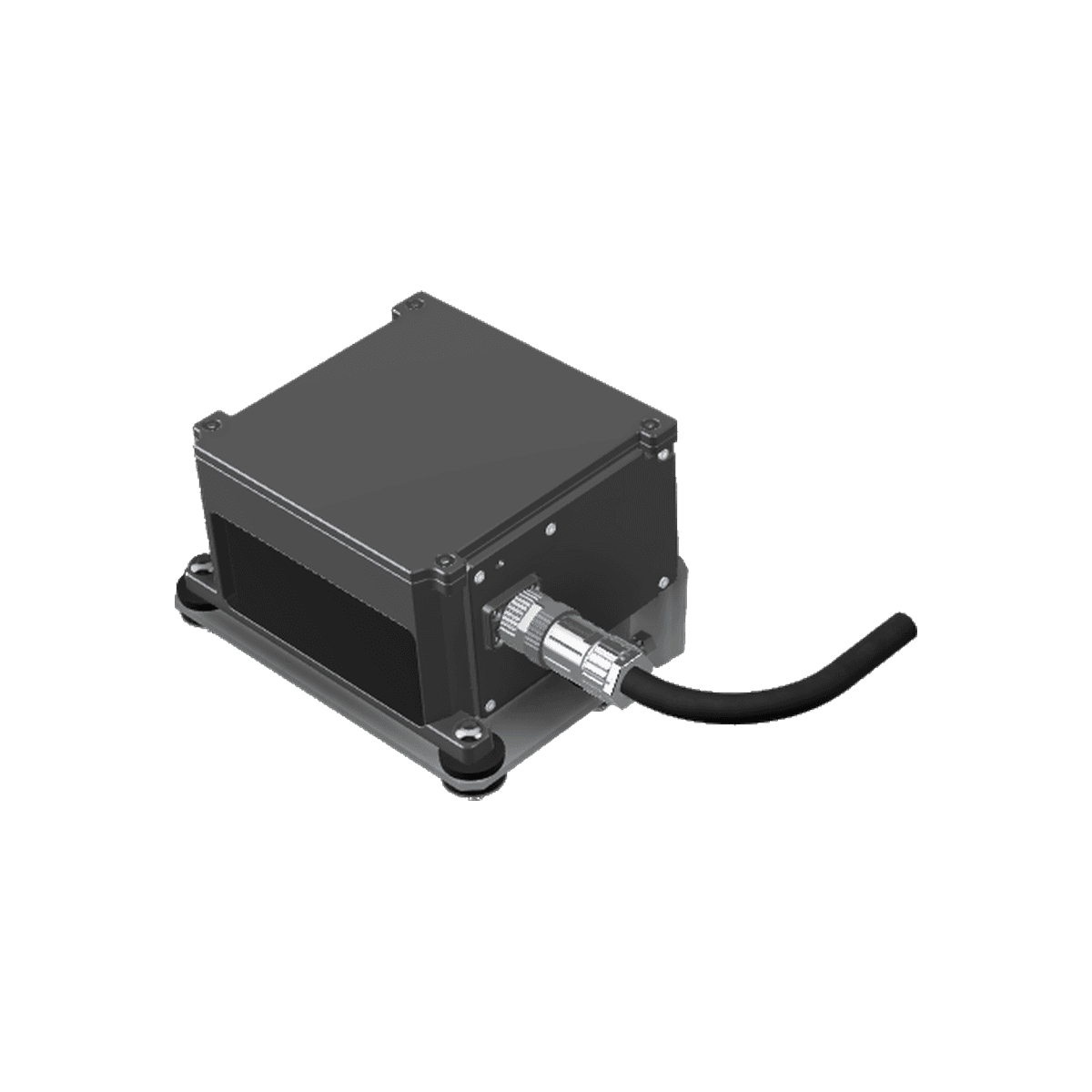
LiDAR
Uses laser light to detect the distance and position of surrounding objects with high precision. It provides the data required for navigation decisions, such as detecting and avoiding obstacles and other vessels at sea.

Camera
Captures visual information about the surroundings to recognize other vessels, floating objects, and navigation marks while under way. It also provides video that the captain uses for visual confirmation.
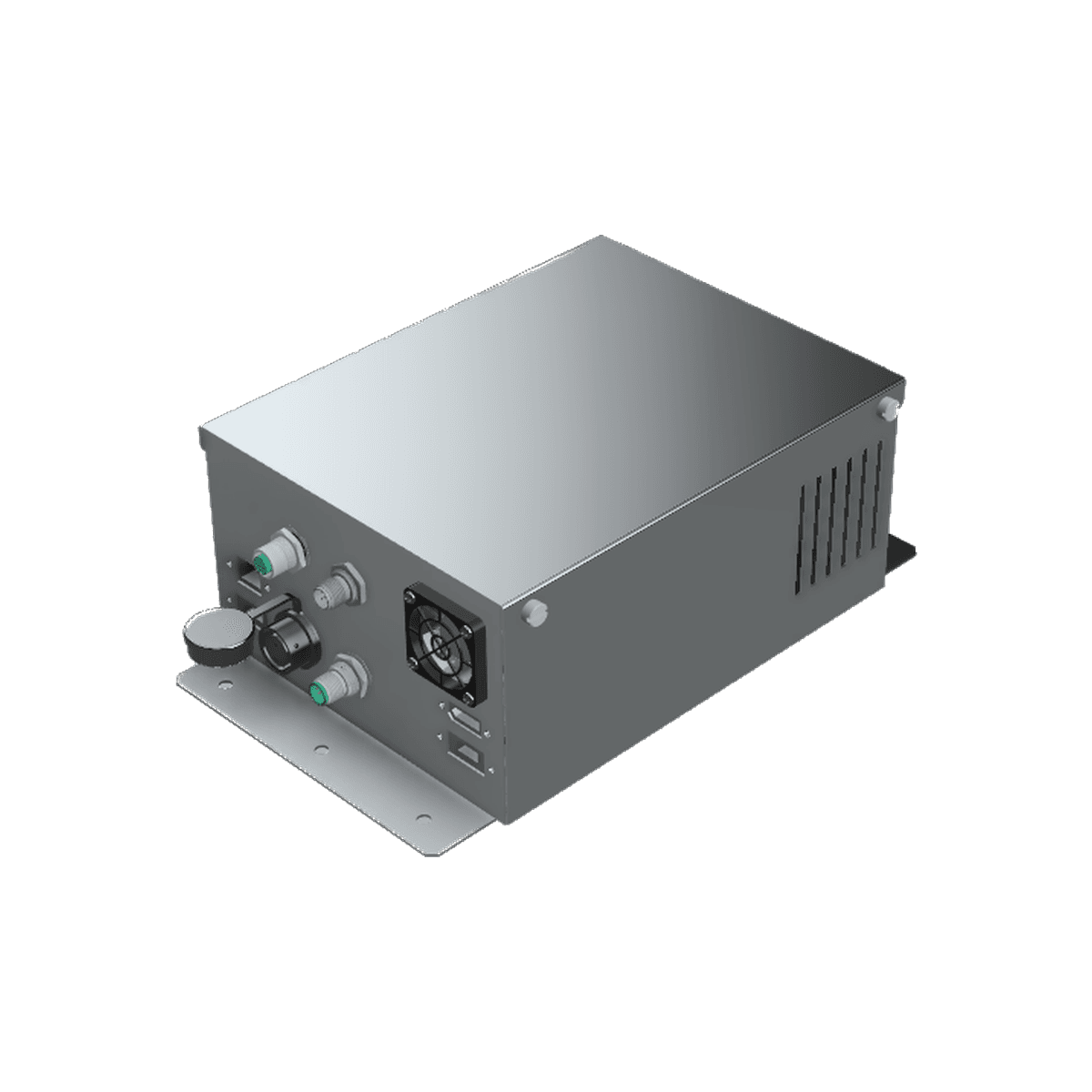
Control Unit
The core device that manages and analyzes data from each sensor together with the vessel's status, judges the situation, and issues commands. Every AI CAPTAIN function runs on this unit.

Joystick
A device for simple manual maneuvering. The lever gives intuitive control of the vessel's heading and speed, and is also used for fine maneuvering such as docking and undocking.
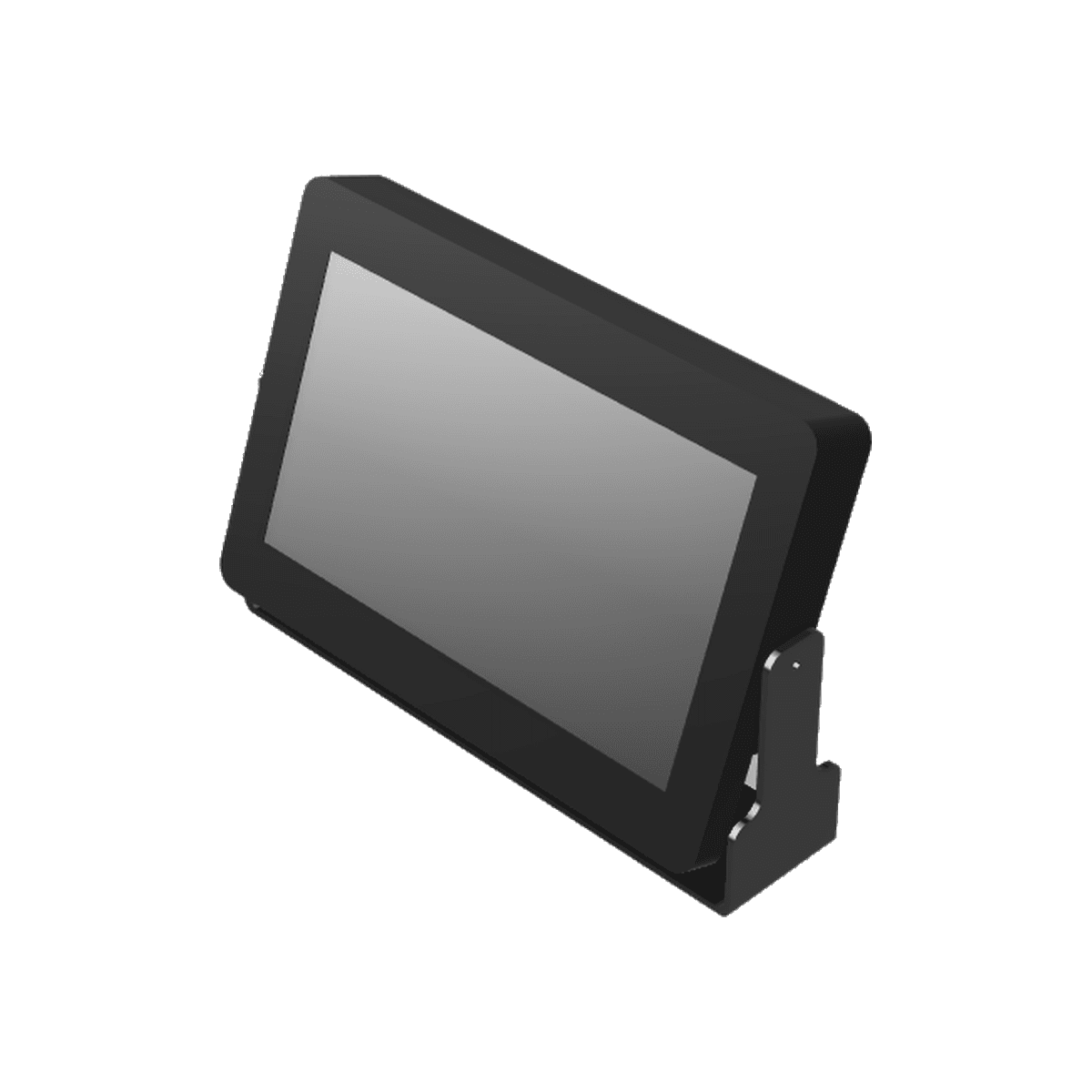
UI Display
A monitor that brings the vessel's position, surrounding vessels and obstacles, and the planned route together on a single screen. Destinations can be set and autonomous navigation started or cancelled from the same screen, keeping the captain aware of the navigation status at all times.
Available Functions
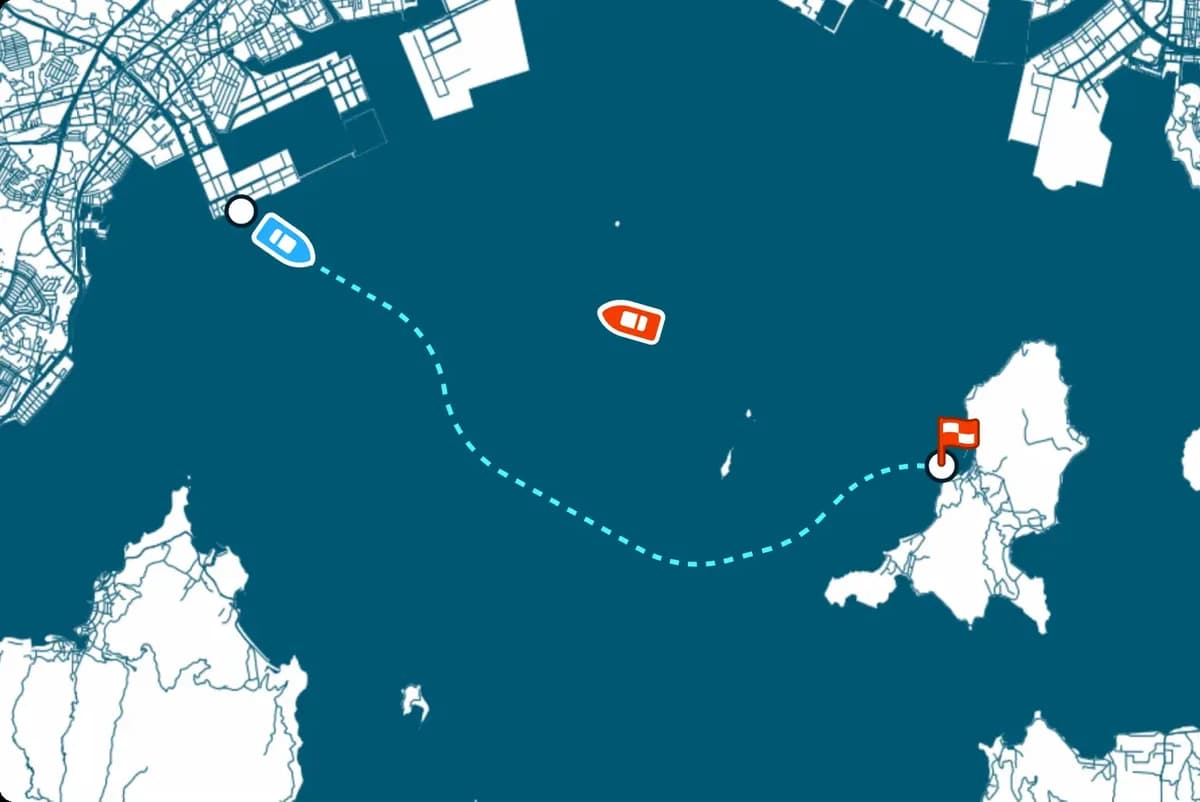
Autonomous navigation
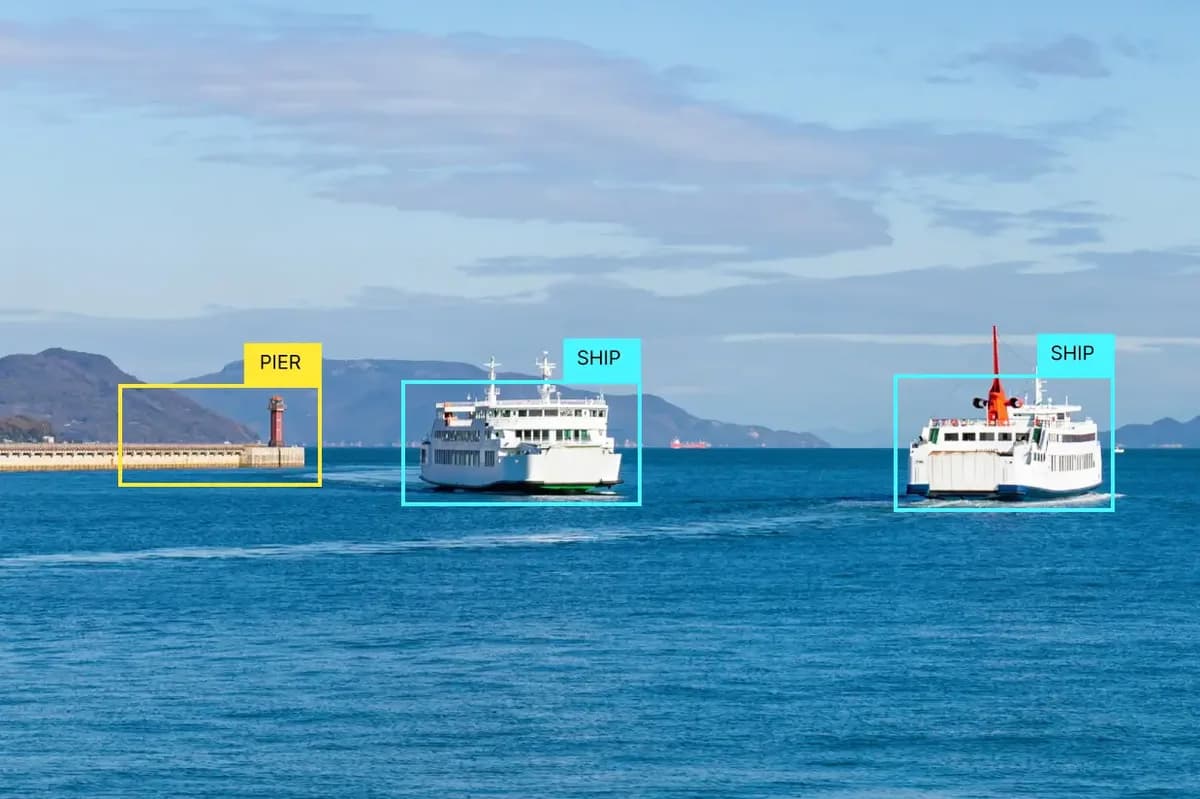
Vessel & obstacle recognition / avoidance
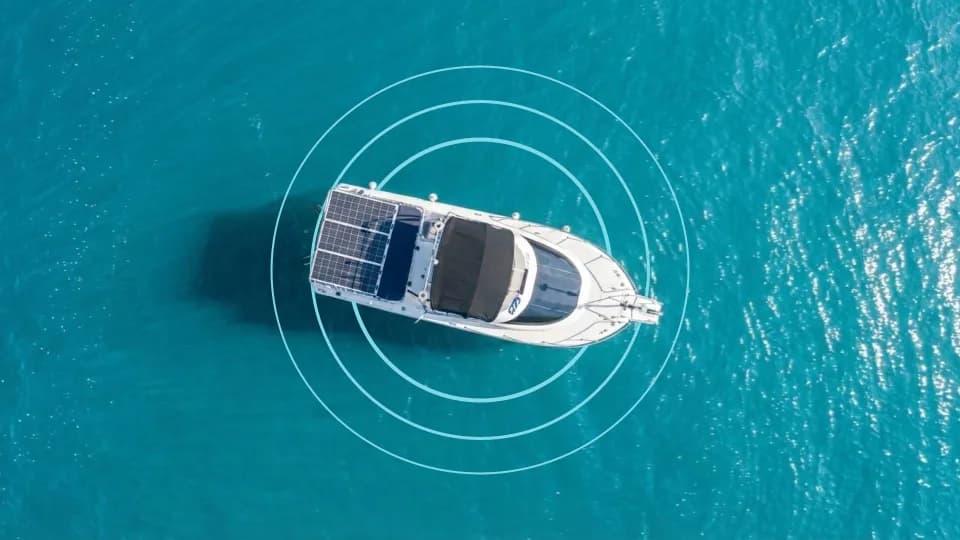
Station keeping
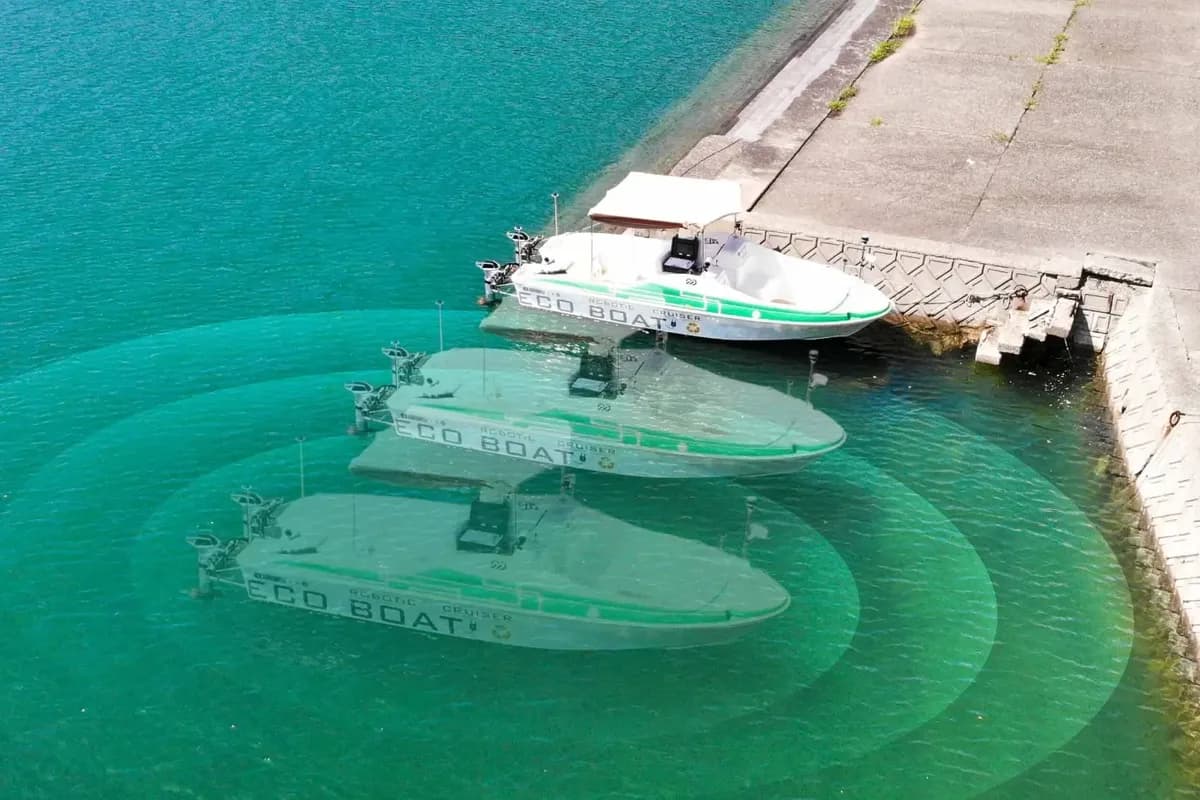
Automatic docking & undocking
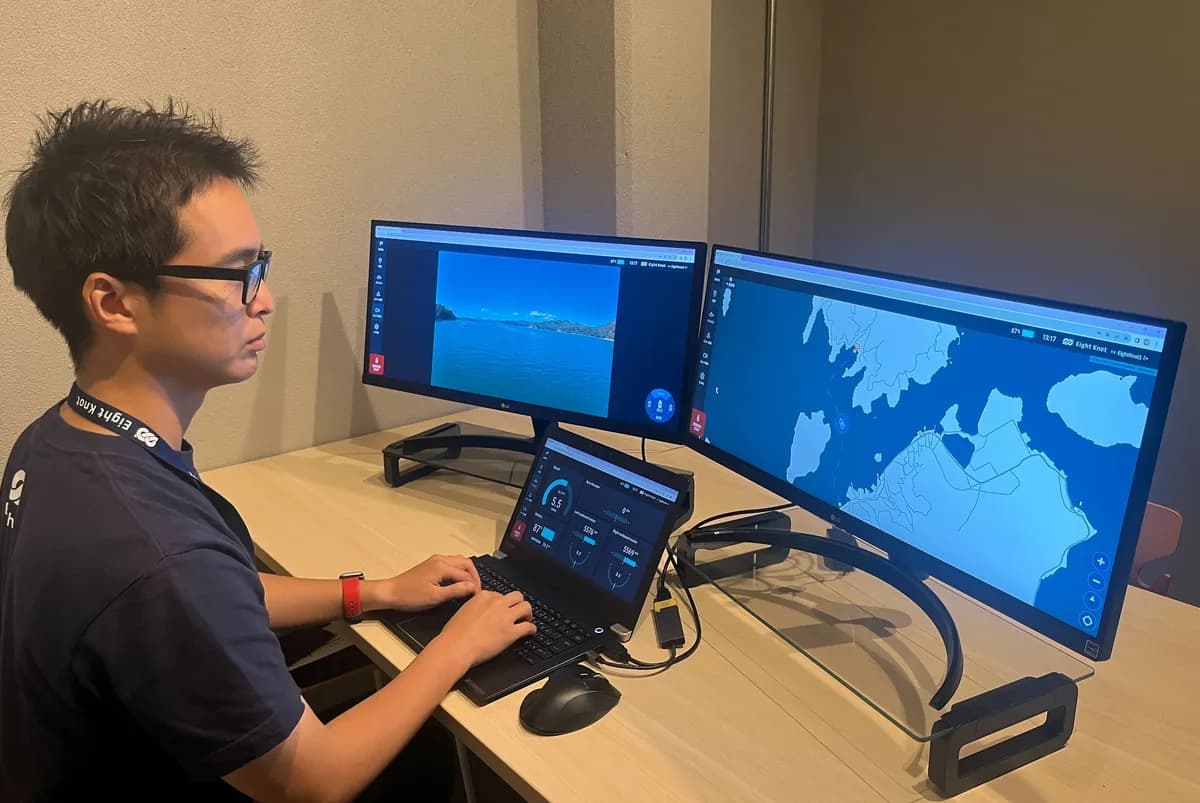
Remote monitoring system
Module

Each technology making up Eight Knot AI CAPTAIN is offered as a module that marine equipment manufacturers can embed into their existing products. Functions such as maneuvering control, localization, perception, route generation, and safety decisions can be added as required, supporting enhanced functionality and automation in marine equipment.
Vessel intelligence modules at a glance
Scalable from the minimal configuration that enables autonomous navigation, expandable as needed.
Own Ship
GNSS/QZSS, IMU
Maps
Fishing area, depth, land, local rules
Destination
Touch input, remote terminal
Surroundings
Camera, LiDAR, RADAR, AIS
Nav Logs
Position, speed, rudder, RPM
Remote Monitor
Real-time monitoring
Info Monitor
Other ships, surroundings, own ship
Main Engine
Engine, steering, thrusters
Localization
Self-localization
Monitoring
Visualization & remote monitoring
Decision
Safety decisions (proceed / avoid)
Planning
Route generation (cruise / avoidance)
Perception
Vessel & obstacle recognition
Control
Route-following control (MPC)
Dynamics
Hull motion model estimation
Vessel intelligence module lineup
Each module can be introduced individually or in combination.





Intelligence Technology Use Cases
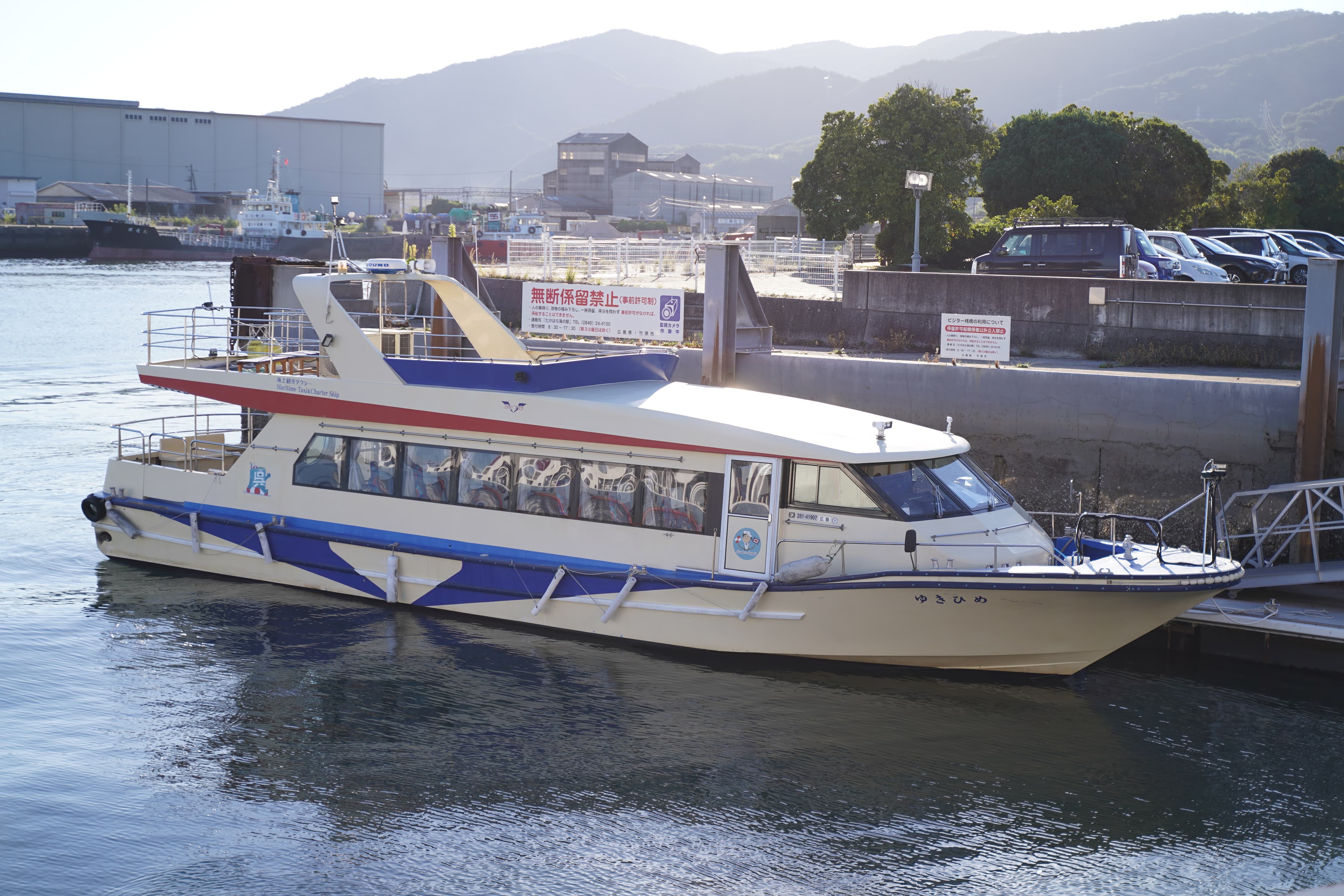
Introduction of autonomous navigation platform
- Company Name
- Bunker Supply Co., Ltd.
- EightKnot Solution
『Eight Knot AI CAPTAIN System』
Implementation Details
The "Smart Marine Bus Yukihime" is equipped with the autonomous navigation platform "Eight Knot AI CAPTAIN System."
While we were concerned about continuing operations due to a serious labor shortage, the practical application of autonomous vessels has reduced the burden on the crew. The AI clearly indicates the ship's position, and the crew can double-check it, creating a strong sense of security and reducing fatigue during long voyages and anxiety during nighttime navigation.
We also expect that AI-assisted navigation will facilitate the entry of new personnel and female seafarers, leading to an environment where diverse talent can thrive.
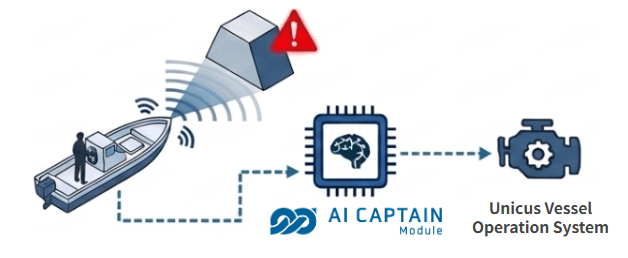
Collision Avoidance System
- Company Name
- UNIKAS INDUSTRIAL INC.
- EightKnot Solution
『Eight Knot AI CAPTAIN Module』
- Localization / Perception / Decision / Control
Implementation Details
Intelligent Products
Collision Suppression Device
Co-Created Value
Automatically detects obstacles and reduces speed to prevent collisions before they occur
Adds AI-driven dual-layer safety to conventional vessel operation functions
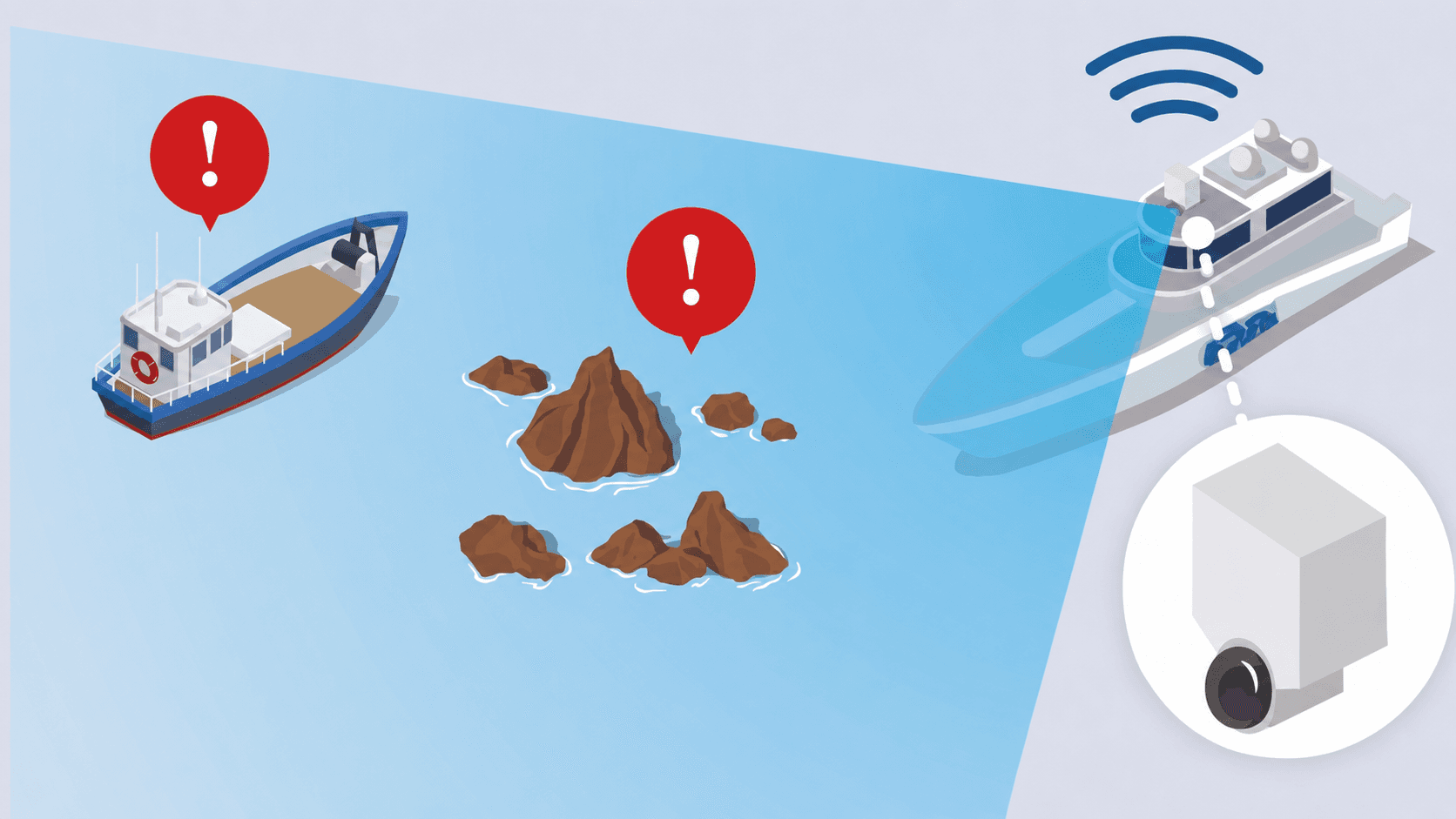
Marine-Dedicated Video Recording System × Autonomous Navigation Technology
- Company Name
- Yupiteru Corporation
- EightKnot Solution
『Eight Knot AI CAPTAIN Module』
- Perception
Implementation Details
Intelligent Products
Marine-Dedicated Video Recording System
Co-Created Value
Early detection of accident risk through the fusion of AI, sensors, and video analytics
Improved vessel safety through real-time detection and navigational safety prediction
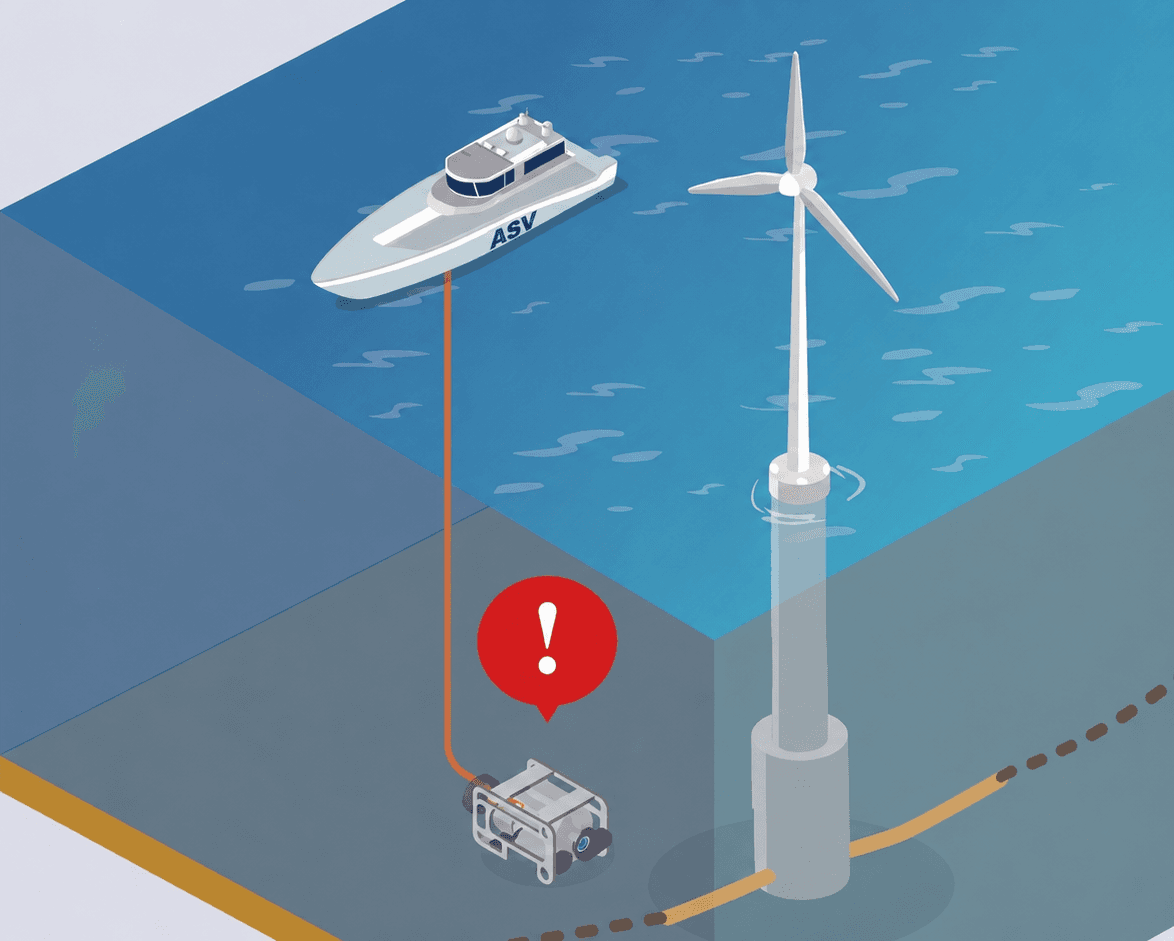
Autonomous Surface Vehicle (ASV) × Remotely Operated Vehicle (ROV)
- Company Name
- FullDepth Co., Ltd.
- EightKnot Solution
『Eight Knot AI CAPTAIN Module』
- Localization / Planning / Control
Implementation Details
Intelligent Products
Subsea Cable Inspection Solution for Offshore Wind
Co-Created Value
Labor and workforce reduction in subsea cable inspection through ASV×ROV collaboration
Improved safety and operational efficiency in offshore wind facility inspection